Infuriating but Addictive: The Anti-Logic Difficulty Design Behind Brain Test
Ask any Brain Test player to describe the game in one breath and you will hear the same contradiction: “It makes me want to throw my phone, but I can’t stop.” The series has built a decade-long fanbase on a specific kind of difficulty — not hard because it is complex, but hard because it refuses to play by the rules it implies.
This post looks at why that “infuriating but addictive” loop works, and what real players say when they hit the wall.
”Equal Parts Satisfying and Infuriating”
The phrase shows up constantly in player reviews. On browser-portal comment threads (Poki, Playgama), one player summed up the genre perfectly:
“If you are the type who screams at their phone, this will either ruin or make your day.”
That is the whole design thesis in one sentence. Brain Test is not challenging your knowledge — it is challenging your assumptions. The puzzle tells you one thing with its layout and expects you to do the opposite. When you finally see the trick, the relief is disproportionate to the effort, and that disproportionate relief is the drug.
The Three Tricks Behind the Trick
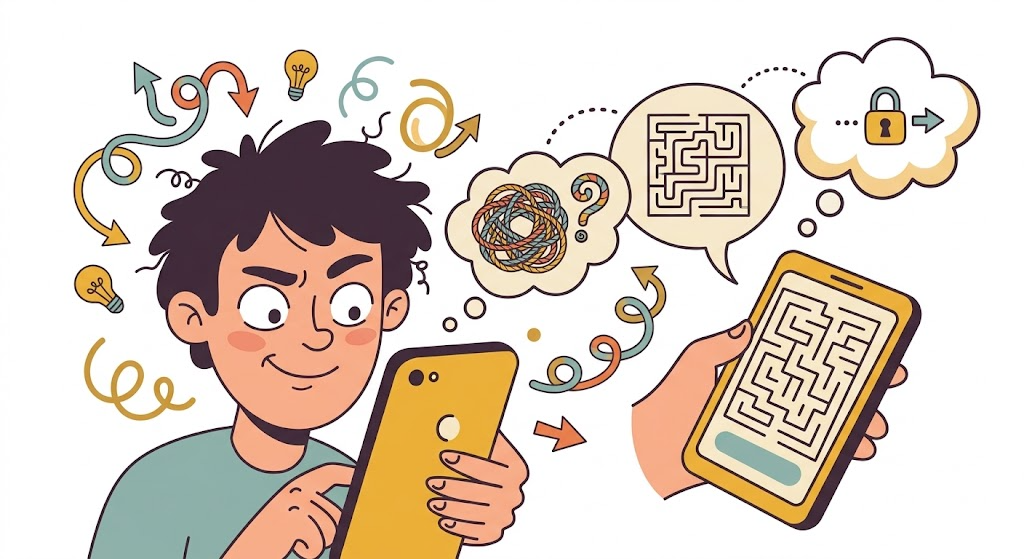
Most Brain Test puzzles reuse a small set of misdirection patterns:
- The decorative-is-functional switcheroo — the UI element you assumed was just art (a cloud, a shadow, a bird) is actually the answer if you drag it.
- The literal-vs-figurative trap — “make the character happy” does not mean tap the smile; it means do something the words never said.
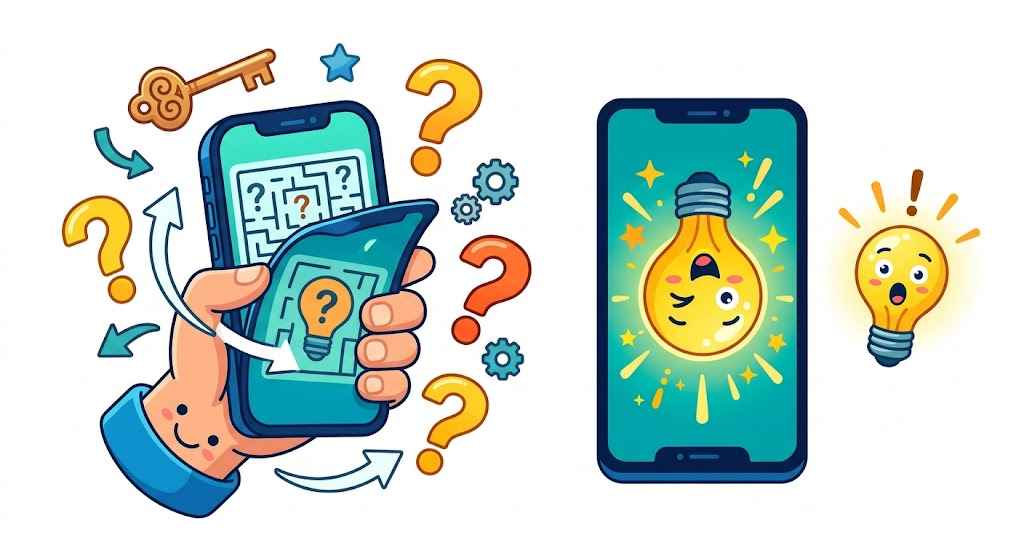
- The physical-world cheat — turn the phone upside down, shake it, close an app-like drawer. The game rewards treating the device as part of the puzzle.
Players argue in comments about which pattern is “fair.” The ones that feel unfair are usually the ones people remember longest — and replay to show friends.
Why Reddit Keeps Calling It “Satisfying and Infuriating”
On community threads, the recurring verdict is that Brain Test is “a game that is equal parts satisfying and infuriating.” The satisfying part is the “aha” moment; the infuriating part is that the “aha” was hiding in plain sight the whole time.
Crucially, the frustration is low-stakes. Unlike a hard action game where you lose progress, a trick puzzle just sits there smugly until you get it. That safety net is what lets the irritation flip into laughter instead of rage-quit.
Is the Design “Unfair”? A Fair Defense
Critics sometimes call the puzzles arbitrary. Defenders counter that the rules are consistent within each puzzle — the game teaches you its own logic through repetition. By Brain Test 5, veteran players start anticipating the switcheroo, and the difficulty shifts from “I don’t get it” to “I can’t believe they did it again.” That evolution is the series’ quiet genius.
Frequently Asked Questions
FAQ
Why is Brain Test so addictive?
Because the puzzles challenge your assumptions rather than your knowledge. The "aha" moment delivers a disproportionate feeling of relief, which trains you to come back for the next trick.
Is Brain Test too hard or unfair?
The difficulty is low-stakes — you never lose progress, so frustration flips into laughter. Most puzzles follow consistent misdirection patterns you learn to anticipate.
What makes a Brain Test puzzle tricky?
Three common tricks: treating decorative UI as the answer, taking instructions literally vs figuratively, and using the phone itself (tilt, shake, flip) as part of the solution.
Which Brain Test is best for the trick experience?
Brain Test 5 pushes the absurdity furthest and is the current chart leader, while All-Star compiles the franchise's most popular tricks in one package.
Where can I find Brain Test level answers and walkthroughs?
Use our level search to jump to any Brain Test answer with step-by-step solutions, or browse the Brain Test 5 walkthroughs to see exactly how the trick is done.
How to download and play Brain Test for free?
Brain Test is free-to-play on iOS and Android. See our download page for all seven titles, plus browser play so you can try a trick level before installing.
Conclusion
Brain Test’s “infuriating but addictive” reputation is not an accident — it is a design philosophy. By refusing to play by the rules it implies, the series turns small puzzles into memorable, shareable stories. Players scream, laugh, and then immediately show a friend.
Ready to test your own patience? Try the Brain Test 5 level walkthroughs or the All-Star IQ Boost guide.